
What to Do With Fall Leaves: A Guide for Central Kentucky Homeowners
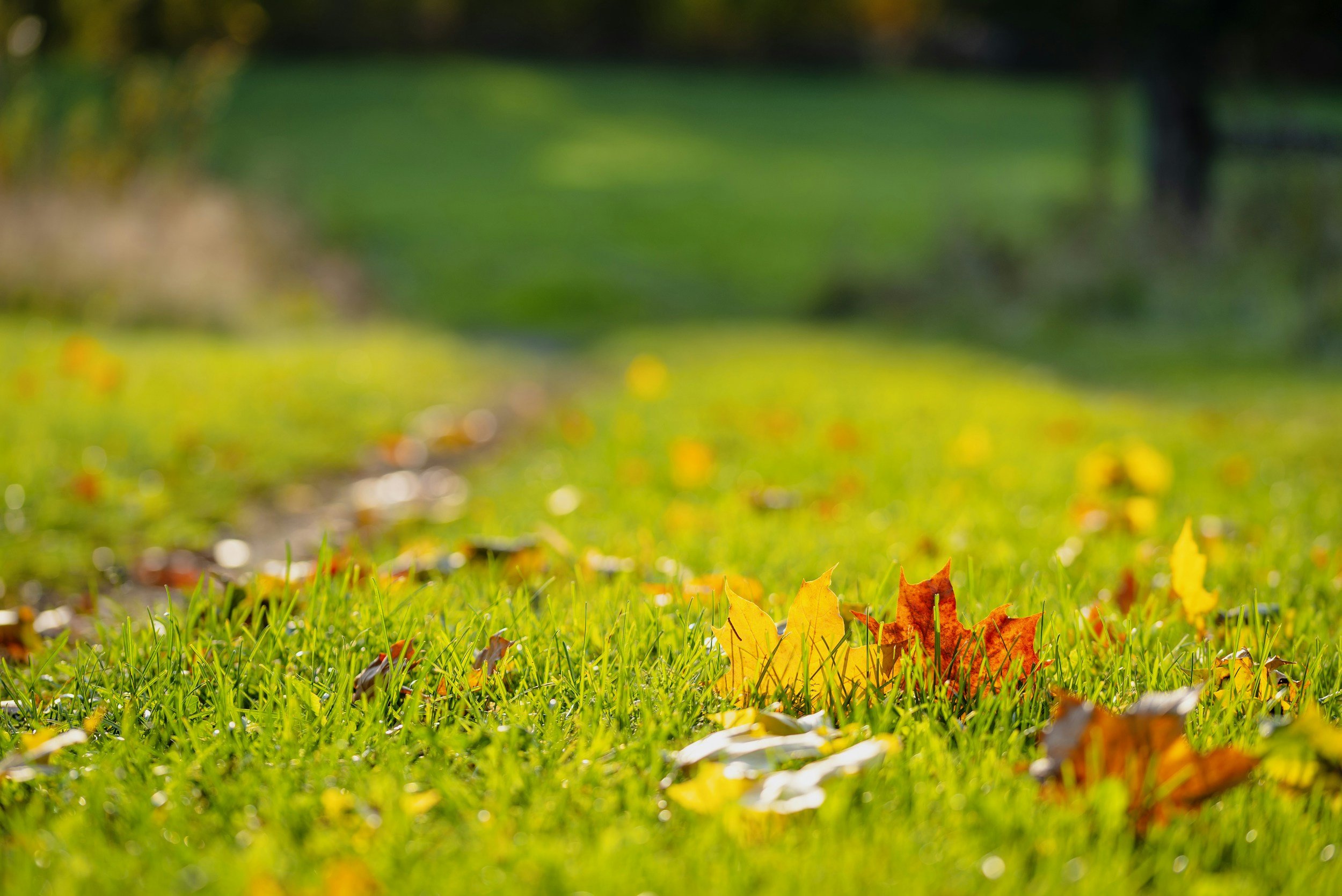
Fall color is one of the best parts of living in Central Kentucky. The trouble starts a few weeks later, when the color is on the ground and still sitting there. Leaves don't just cover the lawn. They collect in garden beds, on patios and walkways, and in the places where water is supposed to drain.
Here's where leaves cause the most problems, and what to do about them.
Where Leaves Cause Trouble
On the lawn A thick layer of leaves blocks sunlight and holds moisture against the grass. If you can't see the turf through the leaves, it's time to clear them. Waiting until spring often means thin, matted patches that take time to recover.
In landscape beds A light layer of leaves can break down and add organic matter to a bed. A heavy, wet layer is different. It can smother low plants, hold moisture against stems and crowns, and make it harder for beds to dry out.
On hardscape surfaces Wet leaves on patios, steps, and walkways get slippery, and they can leave stains on pavers and stone if they sit long enough.
In drains and gutters Clogged gutters, downspouts, and drainage areas send water where it shouldn't go, and standing water that freezes can damage surfaces and cause erosion.
Four Ways to Handle Leaves
There's no single right answer. The best approach depends on how many leaves you have and what your property looks like.
Mulch them with your mower For a moderate amount of leaves, mowing over them breaks them into small pieces that settle into the lawn and add organic matter to the soil. This works best when the leaf layer is light enough that grass is still visible after you mow.
Bag or haul them away Heavy leaf cover, especially from large mature trees, is usually too much to mulch in place. Bagging or hauling is the cleanest option for lawns and hard surfaces.
Compost them Leaves make a useful addition to a compost pile. Mixing them with grass clippings or other yard waste helps them break down more evenly.
Use them in beds, sparingly A thin layer of shredded leaves can work as a natural mulch in some beds. Keep it light, and pull it back from the base of plants and trees.
How Often Should You Clear Leaves?
Leaf drop happens over several weeks, not all at once, so a single cleanup rarely covers it. A few habits help:
Clear leaves regularly during heavy drop instead of waiting for them to pile up
Check gutters and drains after the bulk of the leaves have come down
Do a final cleanup once the trees are mostly bare
Pay extra attention after rain or wind, which can shift leaves into beds and drains

Akers®
When It Makes Sense to Call a Professional
Leaf cleanup is manageable for some yards and overwhelming for others. A professional cleanup can be worth it if:
You have large or multiple mature trees
Your property is on a larger lot or has steep or hard-to-reach areas
You don't have the time or equipment to keep up
You'd like cleanup combined with a final mowing and edging before winter
Keep Your Property Ready for What's Next
A little attention to leaves now means a cleaner yard through winter and less work when spring arrives. Clearing them from the lawn, beds, and drains helps protect the work you've put into your property all year.
At Akers Lawn Care & Landscaping, we help homeowners throughout Central Kentucky with fall cleanup, including leaf removal, mulching, final mowing, and edging. If you'd rather not spend your weekends raking, get in touch with our team and we'll help get your property ready for the season ahead.